
Indian markets on Dalal Street rallied sharply as easing tensions in the US-Iran conflict and stable oil prices boosted sentiment. Track Nifty 50 and BSE Sensex performance and key global triggers.
Indian benchmark indices, Sensex and Nifty, rallied significantly following a sharp decline in crude oil prices. This decline was triggered by US President Donald Trump's announcement of progress in negotiations with Iran towards a peace agreement, which led to renewed optimism in global markets.

From the 30-Sensex firms, Maruti, Power Grid, Tata Motors Passenger Vehicles, HDFC Bank, Asian Paints and Tata Steel were among the biggest laggards. However, Titan, HCL Tech, Tech Mahindra, Infosys and Tata Consultancy Services were among the gainers.
Among the Sensex shares, Infosys, Tata Motors, Axis Bank, Adani Ports, Mahindra & Mahindra, HDFC Bank, Larsen & Toubro, Tata Steel, BEL and Power Grid were among the lead gainers. Kotak Mahindra Bank, ICICI Bank, Bharti Airtel, Asian Paints, Bajaj Finserv, and Titan were the among the laggards.
Indian stock market benchmark indices closed higher, driven by strong performance in blue-chip bank shares and a positive trend in global markets, with hopes of progress in US-Iran peace negotiations also contributing to optimism.

Indian stock market benchmark indices Sensex and Nifty experienced a significant decline, driven by escalating tensions in the Middle East and rising crude oil prices.

Benchmark indices Sensex and Nifty ended marginally higher on Wednesday as a sharp decline in IT blue-chip stocks restricted the rally in the markets.
From the 30-Sensex firms, Adani Ports, HCL Tech, Power Grid, Trent, Bharat Electronics and Bharti Airtel were among the biggest laggards. However, Tata Steel, Asian Paints, Hindustan Unilever, and Eternal were among the gainers.

Indian equities on Dalal Street saw volatility. Track Sensex, Nifty50 movement and key market drivers for Feb 25, 2026.

Indian equity markets closed higher, driven by gains in PSU bank, auto, and financial stocks, following the US Supreme Court's decision on tariffs. Sensex climbed 479.95 points to 83,294.66, and Nifty advanced 141.75 points to 25,713.
Benchmark equity indices Sensex and Nifty extended their gains for the third straight session on Wednesday, driven by last-hour buying in bank, metal, and FMCG shares.

Indian equities on Dalal Street saw volatility as global market trends and fresh tariff concerns linked to Donald Trump impacted investor sentiment. Track Sensex, Nifty50 movement and key market drivers for Feb 24, 2026.
Indian stock markets recovered from early losses to close higher, driven by value buying in IT and banking shares and a rebound in the rupee.
Indian stock markets extended their gains for a second consecutive session, with the Sensex closing 736 points higher, driven by a global equity rally and a significant drop in crude oil prices following the finalisation of a peace deal between the US and Iran to end their 107-day conflict and reopen the Strait of Hormuz.

Among Sensex firms, Sun Pharma, Tata Steel, Power Grid, Asian Paints, NTPC and Bharti Airtel were the biggest laggards. Tata Consultancy Services, Tech Mahindra, Infosys, Adani Ports, Axis Bank and HCL Tech were among the gainers.

The BSE Sensex plummeted 1,236 points, wiping out nearly Rs 7 lakh crore in investor wealth, driven by escalating tensions between the US and Iran and subsequent market selloff.
From the Sensex firms, Mahindra & Mahindra, Maruti, Adani Ports, Bajaj Finserv, Titan, and HDFC Bank were among the major laggards. However, Hindustan Unilever, Trent, HCL Tech, Asian Paints, and Tata Steel were among the gainers.

Benchmark indices Sensex and Nifty experienced a significant decline, falling over 1 per cent due to foreign fund outflows and global uncertainties.

Indian benchmark equity indices Sensex and Nifty surged in early trade, driven by a sharp correction in crude oil prices below USD 100 per barrel and a rally in global markets, fuelled by improving sentiment surrounding US-Iran negotiations.
Indian equity markets experienced a volatile trading day, with the Sensex and Nifty closing almost flat. Market sentiment was influenced by global cues, US-Iran talks, and profit-booking activities.
Indian benchmark equity indices Sensex and Nifty experienced a significant crash in early trade, triggered by a sharp increase in crude oil prices and escalating tensions in the Middle East.
From the 30-Sensex firms, Bharat Electronics, Power Grid, Tata Motors Passenger Vehicles, Asian Paints, Reliance Industries, and Bajaj Finserv were among the biggest gainers. However, HCL Tech, Kotak Mahindra Bank, ICICI Bank, and Sun Pharma were the laggards.
Benchmark stock indices Sensex and Nifty closed on a flat note in a choppy session on Wednesday as gains in PSU banks and auto shares were offset by losses in IT stocks.
From the Sensex firms, Power Grid, Eternal, Tata Motors, Tata Steel, Maruti and Bharat Electronics, were among the major laggards. However, Titan, Bharti Airtel, Bajaj Finance, Mahindra & Mahindra, and State Bank of India were the gainers.
Benchmark Sensex tumbled 1,236 points or 1.5 per cent while Nifty closed near 25,450 on Thursday following an across-the-board sell-off amid escalating geopolitical tensions between the US and Iran.

From the Sensex firms, Infosys, Tata Consultancy Services, HCL Tech, Tech Mahindra, Tata Motors, Sun Pharma, Maruti and Titan were among the major gainers. Bharat Electronics, Asian Paints, Bharti Airtel and ICICI Bank were among the laggards.

From the 30-Sensex firms, HDFC Bank, Infosys, HCL Tech, Bajaj Finance, Tata Consultancy Services and Reliance Industries were among the biggest laggards. In contrast, Bharat Electronics, Hindustan Unilever, Tata Steel and UltraTech Cement were among the gainers.
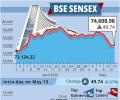
Indian benchmark equity indices, Sensex and Nifty, closed marginally higher, breaking a four-day losing streak, despite elevated crude oil prices and ongoing geopolitical uncertainties. The market saw a temporary pause in panic selling, though cautious sentiment persists.

Among Sensex firms, Trent, ICICI Bank, Tech Mahindra, Bajaj Finserv, Mahindra & Mahindra, Power Grid, Tata Consultancy Services and Bajaj Finance were the major laggards. However, Tata Steel, Larsen & Toubro, State Bank of India, Kotak Mahindra Bank were among the major gainers.

Stock markets rebounded on Friday with the benchmark Sensex closing higher by 316 points after heavy buying in banking and metal shares amid optimism over trade deal progresses and India's participation in Pax Silica.

The rupee will be a key determinant for stock markets.
Benchmark indices Sensex and Nifty tumbled in early trade on Friday after a two-day rally, tracking a weak trend in global peers, as the US-Iran conflict continues to be a key overhang for the markets. Track Sensex, Nifty50 movement and key market drivers for March 27, 2026.

From the 30-Sensex firms, Eternal declined by 4.02 per cent, followed by Bajaj Finance (3.88 per cent), Sun Pharma, InterGlobe Aviation, Trent, Asian Paints, Mahindra & Mahindra and Bajaj Finserv. HDFC Bank emerged as the only gainer from the pack.
From the 30-Sensex firms, Tata Steel, Asian Paints, Trent, State Bank of India, Hindustan Unilever, UltraTech Cement, ICICI Bank and Bharti Airtel were among the gainers. On the other hand, Infosys, Bajaj Finance, Bharat Electronics, Larsen & Toubro and HDFC Bank were the laggards.
Benchmark indices Sensex and Nifty ended lower on Thursday, snapping a three-day rally, amid a weak trend in global stock markets.
Among the Sensex constituents, Asian Paints, Tech Mahindra, HCL Technologies, Tata Steel, Maruti Suzuki India, Sun Pharmaceuticals, Tata Consultancy Services, ICICI Bank, Bajaj Finance, UltraTech Cement, Mahindra & Mahindra and Tata Motors Passenger Vehicles were the laggards. However, Eternal, Titan, Adani Ports, Bharat Electronics Ltd, State Bank of India, Bajaj Finserv, NTPC and Bharti Airtel were among the gainers.
Among Sensex firms, Axis Bank, HDFC Bank, Reliance Industries, ICICI Bank, Bharat Electronics and Larsen & Toubro were the biggest laggards. However, Asian Paints, Maruti, Bharti Airtel and Bajaj Finance were among the gainers.

Indian benchmark indices, Sensex and Nifty, ended lower in choppy trade, with the Sensex declining 114 points, as investors reacted to unabated foreign fund outflows and rising geopolitical uncertainties.
Market sentiment is likely to remain cautious as investors position themselves for the upcoming Union Budget and the US Fed's interest rate decision, where expectations are muted.
Indian stock markets tumbled sharply with the Sensex falling 800 points and nearly 4 lakh crore wiped out in a single session. Here are the 6 key factors, including rupee weakness and global cues, behind the crash.
